Every season of the year and of life brings its challenges and its joys, and winter is no different.
America today is going through a difficult winter, especially in Minnesota and elsewhere with how this current administration is handling itself with regard to immigration.
American citizens being executed on camera by government agents, officials lying about it and obstructing justice.
It’s not what many of us ever thought we’d see in our country.
As always, I look to history for comfort, guidance, and reassurance that this too shall pass, and that better days are ahead for all of us.
250 years ago, the first winters before and after the Declaration of Independence were hard to say the least, with times of despondency mixed with successes.
As I was reading recently about the grueling and perilous flight from New York through loyalist heavy New Jersey of Washington’s tattered army in December 1776, with battle wounds not healed, insufficient cold weather clothes, most not having even proper shoes and having rags tied around their bloody feet while trudging through cold mud and snow for 150 miles to get to the sanctuary of Pennsylvania, I wondered what those first American soldiers would think of the country today, and if they would be proud of what they fought for, or would they think it wasn’t worth what they sacrificed and endured?
Nations and their people fight wars for many reasons, often times those reasons are not noble or respectable, but what is always the most astonishing and humbling to me is when it is done in defense of a pure idea such as independence, and how the determination of some never wavers in spite of the hardships.
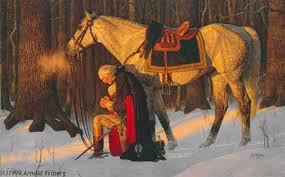
We tend to, or at least I do, think of our heroes like George Washington as some kind of superhuman that never had doubts or frustrations and just kept on determinedly working for their cause and never wanted to quit.
The reality is that while he might have tried to keep that as his external persona for the troops and the public, in private and in his correspondence he was as human as the rest of us, and to me at least, that makes him even more endearing.
He almost immediately second guessed his decision to accept command of the continental army. He lamented being away from his family and his home from the beginning and that feeling lasted for years.
He felt the incalculable pressures of leadership and being responsible for the whole effort and all of the people under him.
He felt the despair and self doubt after losses that make one question whether it was all worth it and if they shouldn’t just quit and admit defeat.
He felt hurt and pain when backstabbed by those closest to him who doubted his abilities when things were not going well.
In short, if George Washington and the continental army could push on through all of that and persevere, then this generation of Americans will no doubt find a way to push through our current season of difficulties, losses, and setbacks.
One more interesting note.
Along on that hellacious journey through New Jersey with Washington and his ever shrinking and tattered army was one Thomas Paine, who would begin writing his famous American Crisis during that journey and publish it as soon as they reached Pennsylvania.
The now immortal opening passage was inspiring to everyone, and Washington had all the soldiers read it on Christmas Eve before they began their surprise attack on Trenton–
“THESE are the times that try men’s souls: The summer soldier and the sunshine patriot will, in this crisis, shrink from the service of his country but he that stands it NOW, deserves the love and thanks of man and woman. Tyranny, like hell, is not easily conquered; yet we have this consolation with us, that the harder the conflict, the more glorious the triumph.”

 Perry Waag