Blog

‘Noblesse Oblige Is Out, Citoyen Oblige Is In’

Perhaps it’s because I’m only a few months away from turning 50, and that a few days after that our country turns 250, but the thought of “time” is ever present in my mind, whether it’s the past, the future, or the here and now.

At any given moment, depending on how one is feeling about themselves and the world around them, a person could be sad or happy about what has come to pass and what is yet to be.

I recently heard for the first time a Chinese proverb that I googled to make sure was real–“All of the flowers of all the tomorrows are in the seeds of today”.

I don’t know if it’s because of something inherent in our makeup as Americans, or simply the ongoing effect of being in a capitalist society, but as a student of history one big recurring flaw that I see in our country is that when we make mistakes through the years, it is because we are thinking only of the short term and not about the long term consequences of our actions or inactions, as the case may be.

I wonder how many Americans have the thought cross their minds each day that while our national conversation is perpetually torn in two, that our competition in the form of China, Russia, India, and Europe are consciously working to fill the void of leadership we leave behind and even further hasten our descent from our unique position in world affairs as its only superpower?

I wonder how many Americans have the thought cross their mind at all, that every day that our national debt continues to explode unabated that it further darkens the long term clouds over our country for future generations?

We have proven that we are very good at kicking the can down the road, but we never look to see what that road looks like further ahead, and what the consequences might be.

For most of our history we relied on the concept of “noblesse oblige”, where the rich felt obliged by their upbringing to give back to the masses in the form of public service, charitable giving, etc.

This was always a crutch for those in the 99% to not have to think too hard, to not feel too bad if they didn’t vote, because somewhere somehow one of their betters would pick up the slack and keep the country running properly.

This mindset helped lead to the election not once but twice of our current President. I’ve lost count of how many of his supporters over the years have just dismissed any concerns about him by either stating that he didn’t have to run, he was doing this as a sacrifice for the nation, or that even if he is a menace and problem, that others around him will make sure the right thing gets done.

I do not believe that all members of the 1% are bad, selfish, amoral, and greedy, nor do I believe all members of the 99% are tuned out and apathetic.

But we cannot continue to live under the delusion that simply because it costs a lot of money to run for office in our broken and perverted system that only rich people should try.

Yes, there are still many in our upper classes who have an admirable mindset of noblesse oblige, but what we need more and more of is, to a coin a new French term, citoyen oblige.

From this day forward, every citizen must see it as their highest duty to educate themselves about the issues of the day, to vote, where possible run for elected office, to hold elected officials accountable for their actions and decisions–in short, do everything within their power to leave our country better off than they found it.

If we can do that, then there should be no reason to fear what will blossom from the seeds of today in the next 250 years.

The Winter of Our Discontent, 1776 vs. 2026

Every season of the year and of life brings its challenges and its joys, and winter is no different. 

America today is going through a difficult winter, especially in Minnesota and elsewhere with how this current administration is handling itself with regard to immigration.  

American citizens being executed on camera by government agents, officials lying about it and obstructing justice.  

It’s not what many of us ever thought we’d see in our country.

As always, I look to history for comfort, guidance, and reassurance that this too shall pass, and that better days are ahead for all of us. 

250 years ago, the first winters before and after the Declaration of Independence were hard to say the least, with times of despondency mixed with successes.

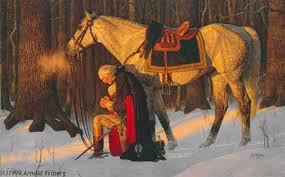
As I was reading recently about the grueling and perilous flight from New York through loyalist heavy New Jersey of Washington’s tattered army in December 1776, with battle wounds not healed, insufficient cold weather clothes, most not having even proper shoes and having rags tied around their bloody feet while trudging through cold mud and snow for 150 miles to get to the sanctuary of Pennsylvania, I wondered what those first American soldiers would think of the country today, and if they would be proud of what they fought for, or would they think it wasn’t worth what they sacrificed and endured?

Nations and their people fight wars for many reasons, often times those reasons are not noble or respectable, but what is always the most astonishing and humbling to me is when it is done in defense of a pure idea such as independence, and how the determination of some never wavers in spite of the hardships.

We tend to, or at least I do, think of our heroes like George Washington as some kind of superhuman that never had doubts or frustrations and just kept on determinedly working for their cause and never wanted to quit.  

The reality is that while he might have tried to keep that as his external persona for the troops and the public, in private and in his correspondence he was as human as the rest of us, and to me at least, that makes him even more endearing.

He almost immediately second guessed his decision to accept command of the continental army.  He lamented being away from his family and his home from the beginning and that feeling lasted for years.  

He felt the incalculable pressures of leadership and being responsible for the whole effort and all of the people under him.  

He felt the despair and self doubt after losses that make one question whether it was all worth it and if they shouldn’t just quit and admit defeat.  

He felt hurt and pain when backstabbed by those closest to him who doubted his abilities when things were not going well.  

In short, if George Washington and the continental army could push on through all of that and persevere, then this generation of Americans will no doubt find a way to push through our current season of difficulties, losses, and setbacks.

One more interesting note.  

Along on that hellacious journey through New Jersey with Washington and his ever shrinking and tattered army was one Thomas Paine, who would begin writing his famous American Crisis during that journey and publish it as soon as they reached Pennsylvania.  

The now immortal opening passage was inspiring to everyone, and Washington had all the soldiers read it on Christmas Eve before they began their surprise attack on Trenton–

“THESE are the times that try men’s souls: The summer soldier and the sunshine patriot will, in this crisis, shrink from the service of his country but he that stands it NOW, deserves the love and thanks of man and woman. Tyranny, like hell, is not easily conquered; yet we have this consolation with us, that the harder the conflict, the more glorious the triumph.”

The Duality Of History

I was going to do my December blog post a few weeks ago but then decided I wanted to wait until the interlude between Christmas and New Years because this past weekend we were doing a quick two day trip and I suspected it would have an impact on my thoughts.  It did.

Growing up in the North and being a student of history, I remember learning about the horrors of Andersonville Prison in Georgia during the Civil War.

(For those unfamiliar with it, it was a Confederate prison camp that operated for only 14 months between 1864 and 1865, but the conditions were so appalling and the treatment so bad that of the 45,000 Union & civilian prisoners sent there, 13,000+ died and the rest were very malnourished, diseased, and near death when liberated at the end of the war.  It was a precursor to the conditions in Nazi concentration camps 75 years later during World War 2, and the trial of its commander, Captain Henry Wirz was a precursor to the Nuremberg War Crimes Trials after World War 2). 

Having lived and worked in the Deep South now for 25+ years, there have been many times when I was driving up and down I-75 and would see the exit signs for Andersonville National Historic Site but there was always some reason why I never made the effort to go and check it out.  Usually it was because I had someplace else to be and Andersonville was too out of the way.  

As an ex-Republican I grew up in New York with a less than favorable view of former President Carter.  As a one term president during 4 years of tumultuous world events with mixed results at best, I would say my view of him when I was a teen and young man was more a well meaning but hapless punch line or a joke than someone to seriously look up to.  

(Perhaps that is why young people are not the best choice for running the world.)

Increasingly over the decades my respect for the man grew monumentally, for what he tried to accomplish while in office, what he achieved after leaving office, and how he lived his life.  

In the last few years as President Carter approached 100 years old, and as my family visited more and more presidential libraries around the country in our travels, I kind of felt ashamed that here the one that was closest to me geographically…President Carter’s…I hadn’t made any attempt to go and visit.  

A year ago today after he passed, I resolved that we needed to make the effort to go see both Andersonville and his presidential library.  

We did the presidential library back over the summer when we were in Atlanta, and just this past weekend went to go see his grave & historical site in Plains Georgia as well as Andersonville Historic Site since they are both about 30 minutes apart.  

Which brings me to the main thrust of this month’s blog post.  

After we left Andersonville and the sobering and heart wrenching history of the place and headed towards Plains, I was thinking of the dualities of history.  

How is it that arguably the most authentically Christian president we’ve ever had was created and molded during the height of Jim Crow in one of the most at that time racist areas of the country, and less than 30 miles from a scene of unspeakable human suffering that occurred less than 60 years before he was born?   

The odds would have been very good on a young white male being born in the Deep South in 1924 turning out to be just as racist and full of hate as the rest of society in that area of the country at that time.  

But he didn’t turn out that way.  Why?

These are my observations–

His father was a World War One veteran who had seen the horrors of humanity firsthand and had no wish to see them continue in his children’s lives.  

His mother was a kind and open minded person who loved unconditionally and didn’t care about the color of a person’s skin but the content of their heart.  

His playmates and family friends included local black kids and adults.  

His public school teachers instilled a lifelong love of learning, encouraging him to be a voracious reader and to not just dream about a life beyond sleepy Plains Georgia, but to have the confidence and tenacity to go out into the world and make that life happen.

When we were at the National Prisoner of War Museum at Andersonville, there was a 30 minute video narrated by former Chairman of the Joint Chiefs General Colin Powell, made probably 25 years ago. 

In the video the common theme of all the former POW’s from various wars, including readings of accounts from Andersonville survivors, is that as long as a person kept even the smallest spark of hope and positivity alive inside them, they had a chance to survive, but the second they gave up hope, it was a guarantee that they wouldn’t make it.  

The other major point from the video was that whether a person is a prisoner of war or detained for any other reason, they deserve to be treated with dignity and care. 

It is a lesson that our current administration seems to have chosen to forget or ignore when it comes to detaining illegal immigrants and their families.  

The overriding takeaway for me from Andersonville & Plains, is the incredible juxtaposition of less than 20 miles between despair and hope, cruelty and kindness, destruction and creation, fear and faith.

Sadly, from all the school shootings and terrorism events over my lifetime, I came to the conclusion long ago that anything could happen anywhere, at any time, to anyone.  

What this weekend reminded me of however, is that the opposite is also true.  A good deed can be done by a good person at any time, in any place, by any person.

The new year that will be arriving in a few short days will have plenty of down moments and dark times that will happen all on their own, whether we want them to or not.  

It is up to each one of us to supply the good times and the happy moments every chance we get, for whoever we can, whenever we can, with whatever we have.  

For it is not the dark times that define us, it is how we respond to them.

Calling All Reluctant Warriors (Me Included)

As a history buff I have it on my list of things to do in the coming weeks to watch the Ken Burns American Revolution documentary on PBS, but even before I knew that was coming out, in recent months I’ve been thinking about something related to the American Revolution–the tragedy of good leadership.

I remember reading or seeing someplace in recent years, I think it was David McCullough, who was discussing how every single leader during the American Revolution suffered in one way or another for their efforts on behalf of our nascent nation, and that all of them suffered financially.  

Not a single one of the signers of the Declaration of Independence or framers of the Constitution came out of the Revolutionary War a richer person than they were when it all started.  And many of them suffered personal losses as well, whether it was spouses, or children, or other family members along the way.  

I don’t know what made me think of all that again in recent months, but it’s been on my mind in the form of a question–is all good leadership by its very nature tragic?  Is that the way we can tell our good leaders from our bad leaders?

It’s been said for time immemorial that the best leaders and public servants are the ones who have to be talked into doing it, that the ones who actively seek public office and positions of leadership are usually ill suited for the job.  

As someone who has thought a lot over my lifetime about running for public office and yet has never seriously looked into it, I think a big reason why the best among us are so reluctant to run is precisely because we read about and know about what other past leaders have had to go through, endure, and sacrifice in order to attain those positions of public service and to move society and our government forward–up to and including their lives.

If Lincoln had known he would lose a son and then his own life, would he have still run for President?

If MLK, Malcolm X, RFK, JFK, Anwar Sadat, Yitzhak Rabin, and Mahatma Gandhi had all known they would be assassinated for their efforts, would they have still fought the fights they did?

If all of the many flawed leaders who had messy personal lives but who’s public service hearts were still in the right place, had known that their families would be torn apart by tawdry scandals, would they still have run for office?  

The optimist in me still chooses to believe that most people in this world are good, honest, hardworking people, but the simple truth is that as a people our confidence that the same can be said for our elected officials is shaken.  

Now more than ever we need good people from all walks of life to heed the call to serve their fellow citizens in elected offices, and yet now more than ever, the very people we need are more afraid and turned off from running than perhaps ever before.  

Who in their right mind would want to run the risk of their family and friends being put under a microscope for possible past indiscretions and mistakes?

Who in their right mind would want to run the risk of some nutjob stalking them or trying to harm or kill them or one of their family members? 

Even without the prospects of death or scandal, a heavy price is paid by those who run for office…from missing kids’ birthday parties and little league games, formative years that won’t come back, personal relationships and finances that suffer while focusing on running and holding office.

I can’t tell you how many biographies I’ve read of giants throughout history who basically had no relationship with their own kids while they were growing up because they were so focused on their jobs and left it all up to their spouses, and as a result either the kids turned out bad or had no or difficult relationships with them as adults. 

And yet it’s been said that wars are not fought solely by childless men. 

We are all, whether we want to admit it or accept it or not, in a war for the very soul of our almost 250 year old nation, and we appear to be losing that war at the moment to the greedy and self-serving.  

I do not pretend to know the final outcome, but I do know it will be decided by those who choose to stand and show up, knowing the potential heavy price they may pay, financially and personally.

And given how shaken our collective view of elected officials is, should flawed people even consider running lest they lower that view any further? 

Can our view of elected officials be lowered more than it already is?  If so, should only “saints” consider running for office?

This Thanksgiving I am particularly grateful for every flawed human being who, despite knowing the risks, enters “the arena” Teddy Roosevelt spoke of, and dares to offer their talents and efforts for a cause greater than themselves, and who in so doing, pays homage and thanks to those from prior generations who have done the same.

America’s Last Castle

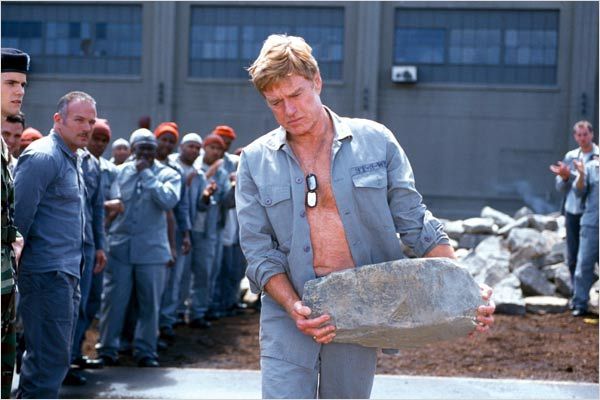
After Robert Redford died last month I decided to re-watch one of my many favorite movies of his.  It’s a lesser known and thought of movie that didn’t do all that well at the box office, but it still has legs almost 25 years after it came out.  

It’s called The Last Castle.  And it inspired the name of this month’s blog post. 

I won’t waste your time re-telling the story or risk ruining the ending at all, but the overall moral of the story (redemption), and one scene in particular, are so relevant to our country today.  

In the scene I’m referring to, a person is made to carry heavy stones from one side of a prison yard to the other as punishment.  

When he finally gets done, thinking it’s all over, he gets told to now move them all back to where they were originally.  At the end of the day, no progress was made, but he’s exhausted.

In a similar way, our country’s forward progress today is like this, and it’s why the American people are fed up with both parties.  

For decades now, each time the Republicans have re-taken power their main goal has been to simply undo what prior Democratic administrations did.  And then when the Democrats get back into power they try to undo the GOP damage and rebuild what was lost.  

All we are doing is moving rocks from one side of the prison yard to another.  Digging a hole and refilling it in.  Building a structure and tearing it down.  No visible progress.  And the American people and the world at large are worse off because of this dynamic.  

It used to be that the shared goal of liberals and conservatives was forward progress, and the main difference being one of speed–liberals wanted to move faster, conservatives slower.

Not anymore, and not for a long time.  

Government is a tool, nothing more.  It can be wielded to do good, or to do bad.  It is up to the user.

The debilitating effect on the American people when one party spends all its efforts while in control of that tool is to use it to undo everything the other party has erected, is to make the people lose confidence in the tool itself.  

And make no mistake about it, that is the current goal of the Republican party…make the American people lose confidence in government as a potential source of improving their lives.  

That’s what this current and all previous government shutdowns have been about at their very core…see how long it takes for the American people to really notice what the government does for them on a day to day basis and see if they are personally affected or miss it…and if they are affected enough to protest strongly enough to get it back working again.  

Until we break up the duopoly and give voters more choices that through competition force the Democrats and Republicans to be the best versions of themselves, we will not replace this cycle of moving the rocks from one side of the yard to the other.

For it is only through cooperation that we can repair the deep cracks in our republic and together build a stronger and shared foundation that will endure for another 250 years.

The Stormy Present

One of my favorite quotes from Abraham Lincoln is “the dogmas of the quiet past are inadequate to the stormy present. The occasion is piled high with difficulty, and we must rise with the occasion. As our case is new, so we must think anew, and act anew.”

Every “present” is stormy to some degree, some more so than others. Our present day is no different.

Every generation faces a choice when it comes to FEAR–Forget Everything And Run, or Face Everything And Rise.

Winston Churchill believed that his generation, instead of lamenting the times they lived in, should be grateful for the opportunity and the honor to be the ones to defend democracy.

Do I wish there weren’t dark clouds gathered over our democracy? Of course.

There are so many other things I’d rather be spending my time on than how to defend and improve our republic, but we cannot choose the times we live in, we can only make the best of them.

Every moment in the life of a nation, or an individual, can be seen as the darkest moment or the brightest moment. Usually both are present. And it is our opportunity, by the way we respond, to determine what we make of it.

I have full faith in this generation of Americans to overcome the evil lure of fascism and Trumpism.

We have faced far worse in our past and we shall overcome this stormy present too.

I’m currently reading John Lewis’ autobiography “Walking With The Wind”, and early on he explains the title.

It comes from his childhood and how one day a really bad storm came through rural Alabama and his aunt had him, his siblings, and cousins, about 9 of them in total, walk hand in hand from one corner of the aunt’s one room rickety wooden home to the other as the tornadic winds tried to rip the home up, and their weight counterbalanced it and the home survived the storm.

In our stormy present we must continue to walk hand in hand and face the winds of hatred together.

Before The Donkey Or The Elephant, America Had A Lion…

…and it came at a cost that we are still paying.

When we were in Nashville this spring I took my family on a tour of The Hermitage, the estate of former President Andrew Jackson.

While I was there, as I so often do, I purchased a book about the person. In this case it was American Lion by Jon Meacham.

Before reading it I knew the basics about the man, as so many of my fellow citizens do…

–hero of the Battle of New Orleans at the end of the War of 1812,
–frontier lawyer and landowner, unapologetic slaveowner, devoted to his wife Rachel who died before he was sworn in as POTUS,
–that he hated the Bank of the United States,
–felt he was a man of the people and worked for them,
–that his inauguration saw a huge raucous house party in the White House,
–his big block of cheese (thanks John Spencer and The West Wing tv show),
–the Nullification Crisis with South Carolina, and
–the massive stain on our country’s history that was the Trail of Tears.

After reading it (it’s a really good book btw), I had a newfound appreciation for the man and a better ability to judge him based on the times he lived in (still 100% wrong about slavery and the forced removal of the Native Americans even during his own times), but I also came away with a valuable insight into leadership that applies to modern times.

The big problem with a leader like Donald Trump is that he is amoral and only cares about himself while he’s expanding the power of the presidency. Despite his words, at the end of the day he doesn’t care about the country or the average person.

The big problem with a leader like Andrew Jackson is that he is completely strident and mostly inflexible in his views, be they about ethics, morality, or policy.

While he truly did care about the country and the average person, because of his harsh & uncompromising leadership style he was just as damaging to the country in how he went about expanding the executive branch then as someone like Donald Trump is now.

You could argue that Andrew Jackson, however well intentioned and well meaning, was America’s first wannabe authoritarian leader.

The United States survived his time in office purely because:

1) he respected the rule of law for the most part,
2) respected and valued our then still new traditions of 2 terms,
3) was in ill health throughout his presidency, and
4) the lessons and experiences of the founding generation were still fresh in the conscience of the nation and some of the founders were still alive to share their views on what was going on and how it correlated to what they intended when drafting the Constitution.

For example, when Jackson broke with tradition and was the first president to use the veto power for policy instead of for purely constitutional reasonings, former President James Madison spoke out and said that the founders did not anticipate the chief executive using the veto power in such a way to flout the will of Congress.

Btw, interestingly enough, a big issue of Jackson’s time was tariffs and the negative impact they were having on the country, primarily the slaveholding states (it’s what led to South Carolina’s attempt at nullification, which in turn was a dress rehearsal for the Civil War and the attempt at secession 30 years later).

As the saying goes, those who fail to learn from history are doomed to repeat it. I truly hope not. For all our sakes.

Does America Need A Deadline?

Starting sometime earlier this month, probably around the 4th of July, I had this thought of “would America work better and quicker at improving itself if it had a deadline?”  

It’s a well known fact of human nature, and this human in particular, that almost all of us are more focused, work harder, faster, and with more determination to achieve our goals when we face a deadline.  

President Kennedy knew this and used it with his moon shot speech to land a man on the moon before the decade was over.  And it worked.

As a history lover I’m constantly looking back over our nation’s history and seeing long continuing threads of the same themes, played out generation after generation, a dichotomy of great deeds and sorrowful acts, of a nation’s soul perpetually at war with itself, with most trying to strive to meet the ideals in the Preamble to the Constitution while simultaneously others are indulging in the worst of their human frailties.

Nations are like individuals in a lot of ways.  They both have beginning dates, which are known and celebrated every year.  Many nations throughout recorded history have had short, turbulent existences, others have existed for far longer.  Tomorrow is never promised to any person, nor is it promised to any nation, however strong and seemingly invincible it may seem.  

But both human and nation go about their daily lives assuming tomorrow will come, and another after that, and another, so that procrastination and complacency can seep into every inch of the fabric of a people.  Why do today what you can put off until tomorrow?  

For almost 250 years we have proudly spoken of our American Experiment with democracy, and through many harrowing and precarious episodes it can come to seem like its continuation is pre-ordained, guaranteed.  

Yes our American Experiment came with a starting date, and yes, it has no expiration date, at least not that we know of.

But maybe we should give it one?  Maybe that will galvanize the masses to bold action, to renew their demand for excellence in government, and quality, class, and dignity in their elected officials.  

If the ancient Greeks had known when their civilization would lose its primacy in the world, would they have worked harder to try and prolong their reign?  Would the Egyptians?  The Romans?

If someone told you exactly when you were going to die, and that you could extend it indefinitely by changing your ways, such as by stopping smoking or drinking, eating healthier, exercising, etc, would you change your ways or just accept the original date and not change a thing?  

As Tim McGraw’s famous song says, maybe America needs to “Live Like You Were Dying” in order to reinvigorate and rededicate itself to its founding ideals.  

Because one thing is certain, and it’s not America’s end date.  What is certain is that if we continue to take our place in the world for granted, we will lose it faster than it took to obtain it, and we will never get it back.

Sculpt Wisely

At the start of summer vacation we have an annual tradition with our daughter of going to a local pottery painting place and picking an item out to paint, usually something small, and usually I just let her do one, but this year I decided to do one also.

While I was working on my masterpiece, deciding which part to paint what color, and letting my thoughts drift to current events, I was reminded of something I heard years ago…that each generation gets to re-make the country in its own image, and that we must sculpt wisely.

Later in the month, while I was re-watching Ken Burns’ Baseball documentary about the history of professional baseball, one of the participants said that 1,000 years from now the only cultural things America will be remembered for are: the constitution, jazz, and baseball.

I would like to think it will be a few more things than that, but it’s a great top three. But then I also immediately thought of how sad that 30 years after that documentary first aired, the first item, the constitution, is under serious threat, and might not even make it to the 1,000 year mark.

I’m sure if you suggested that to someone, including the speaker who said it, back in 1994, they would have thought you were crazy. Nevertheless, here we are.

I think often about how George Washington specifically chose the word “President” because it has a more passive meaning of “presiding over” such as he did during the Constitutional Convention.

He didn’t direct it, and didn’t actively lead it. He set the tone and made sure everyone followed the rules.

How far we have fallen from that ideal for our chief executive to today’s current wannabe dictator (and if SCOTUS and the lap dog Congress have their way, we will be able to drop the “wannabe” sooner rather than later).

Lastly, this past week I finally made a trip to see General Grant’s Tomb in New York City. It’s so ironic that I grew up on and lived on Long Island until the age of 23, even went to Columbia University every day for 6 weeks the summer before my senior year of high school for a summer program, and never once realized or thought about trying to go see it when it’s only 4 blocks from Columbia.

It has only been over my adulthood as I learned more and more about the civil war and Grant’s own life that I became a huge fan of his, but of course now I live 1,000 miles away.

As my family and I were walking towards it last week it struck me how much things can change in 125+ years. Back then, Grant’s Tomb was one of the top tourist attractions in New York City.

Today it is just an afterthought, and we were the only 3 visitors while we were there. At the top of the building in huge letters are Grant’s own words “Let Us Have Peace”.

As I have mentioned in a prior blog post, I’ve been to many ex-Presidents’ graves, and as I did with the others, I said a silent prayer thanking God for Ulysses Grant and for his wife Julia who lays beside him and their sacrifices and service to our nation.

And I hope that as Branch Rickey had the courage to break the color barrier in baseball in 1947 by signing Jackie Robinson, that my fellow citizens in positions of power will find the same courage to stand up to tyranny and autocracy and re-commit themselves to the rules of law and basic human decency.

Above all, I hope this generation sculpts its America wisely.

Mythbusters: Government Edition

There’s still a few days left to go in May, but it’s been such an eventful month already that I know very clearly what I want to talk about…the myth that business people can magically run a more lean and efficient government than those trained in government and politics.

Rooted in our capitalist society, this myth has been around since at least the Industrial Revolution, when the likes of JP Morgan and the rest of the Robber Barons started to feel their stratospheric wealth and position granted them the ability to push government around, both in the news media of the time, in private dealings with government officials, and through campaign donations.

As the saying goes, prostitution is the world’s oldest profession and politics is the second oldest. So it should be no surprise that once business people began to accumulate vast wealth, that corruption in government, which has always existed, would explode as well.

Thankfully, politics does follow similar principles as physics, and for every action there is an equal but opposite reaction, although sometimes very delayed, so over our history we have seen past generations stand against corruption.

Yet, the sad truth is that the people get beat down by the constant onslaught of the news and scandals, such that it deadens the sensitivities of many citizens….which is what the economic royalists as FDR called them are counting on even today.

Early in my working career the credit manager for a large nationwide appliance company that was a client of the company I worked for told me something I’ve never forgotten…”every company that has ever existed has eventually gone out of business.

Another client once told me “lots of companies survive in spite of themselves”.

Countries do not have those luxuries. Superpowers definitely do not have those luxuries.

This month I’ve had to deal with not one, not two, but three companies with very poor customer service, and during those experiences I kept thinking to myself that if government services were run this way, people would be up in arms.

I lost count of how many customer service representatives I had to speak to (it was somewhere between 6 and 10) with the phone company over 10 days and 7+ hours (half of which was being put on hold and listening to elevator music) while trying to resolve a thorny problem (unsuccessfully I might add).

Then add to that finding out that one of the companies we bought a car from still had a lien on the car even though it was fully paid for 16 months ago, and trying multiple times for 3 weeks to even get someone to respond and remove the lien so we could get a paper copy of the title.

Finally, imagine if a citizen had an appointment scheduled with a government agency only to have it get canceled and no one tell them about it and they just happened to find out by contacting the agency themselves. That happened with a third company we’ve been a client of for over 21 years.

For many years the slogan “the customer is always right” has been bandied about, to the point that we all seem to think naively that every company agrees with that and has as the sole focus of their business making the customer happy. But this is not the case. Companies exist to make their owners money. Period. Full stop.

Good companies, successful companies, companies that survive for the long term, know that the best way to make a lot of money is to keep the customers happy. But it’s not a given that every company you or I interact with is a good company or one that will be surviving for the long term.

And given those 3 customer service experiences above, I will be shocked if 100 years from now any of those 3 will still be in business.

Government on the other hand exists solely to keep its customers, its citizens, happy. One aspect of that is the quality of customer service and achieving results for the citizen.

Of course every citizen wants to know their tax dollars are not being wasted or abused, but it is a secondary concern to feeling like they themselves are getting value for the price paid.

In short, wholesale and indiscriminate cuts is not only not smart business, it’s not good government either. There’s a reason why surgeons use scalpels instead of axes or chainsaws to operate on patients.

And just like it takes years or decades to recover (if at all) from botched surgeries, it will take multiple successive terms of good government and best practices to undo the damage both in performance and perception of government services that this administration has and will continue to inflict on the American people.

The question is, will our voters be patient patients enough to allow that healing process to begin and sustain it through multiple elections in our hyperpartisan times?